Oolong is the most varied family of tea. It sits between green tea and black tea, and within that space it runs from fresh and floral to dark and roasted. The range comes from how far the leaf is allowed to oxidise and how it is finished.
What oxidation does
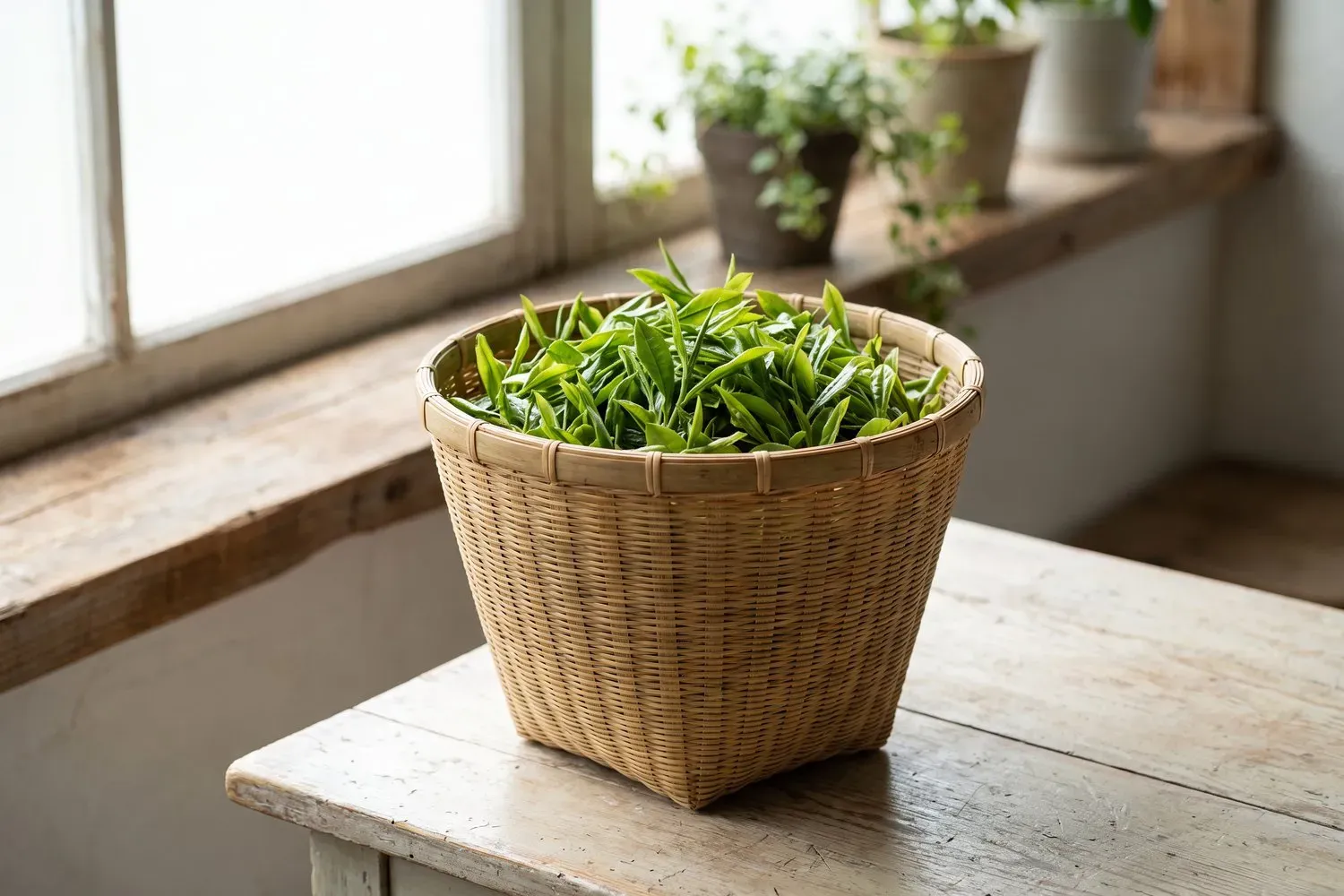
All tea begins as the same leaf. After picking, the leaf is bruised and left to oxidise: the same process that turns a cut apple brown. Green tea is stopped almost at once, black tea is taken all the way, and oolong is stopped somewhere in the middle.
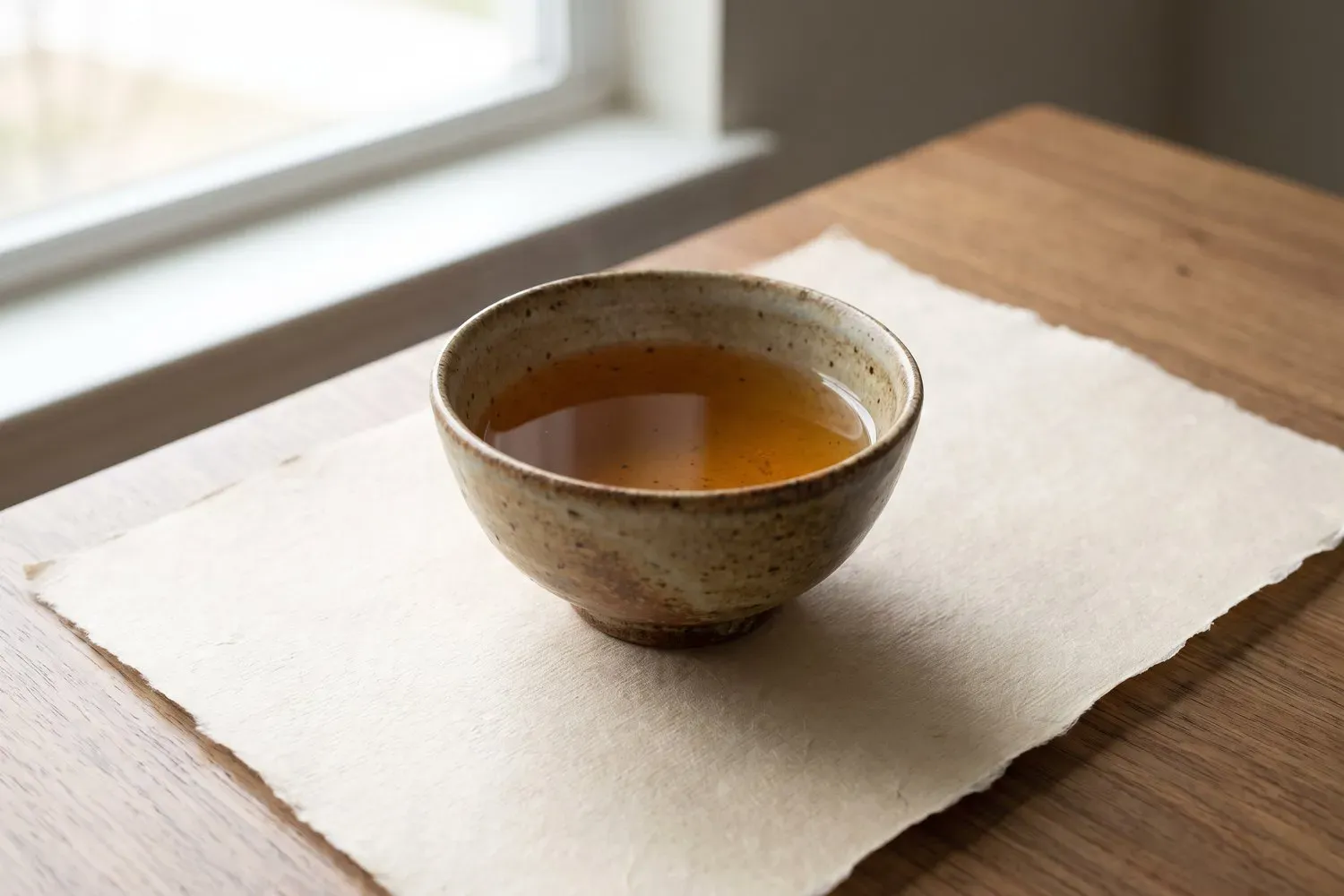
Stop it early and the cup is light, floral and green. Let it go further and it becomes rounder, with fruit and honey. Roast it afterwards and you add nuts, caramel and a mineral depth.
From green to roasted
Our oolongs show the whole span. Ali Shan, from Lin Wen-hui's farm in Taiwan, is lightly oxidised and tastes of orchid and sweet cream. Tieguanyin, from Anxi, sits a little further along and brings butter and a soft roast. At the far end, Huang Jian's Da Hong Pao in the Wuyi Mountains is charcoal roasted until it tastes of cocoa and warm stone fruit.
None of these is better than another. They are different points on one line, and which you want depends on the day.
How oxidation is stopped
Once the leaf has reached the level the maker wants, the process has to be halted. In most oolong this is done with heat: the leaf is tumbled in a warm drum, which dries it and fixes the character. After that the leaf may be rolled into balls or twisted into strips, and some oolongs are roasted again, once or several times, over charcoal or in an oven.
That last step is why two oolongs from the same cultivar can taste so different. A light roast keeps the perfume; a long roast trades some of it for depth.
How to brew oolong
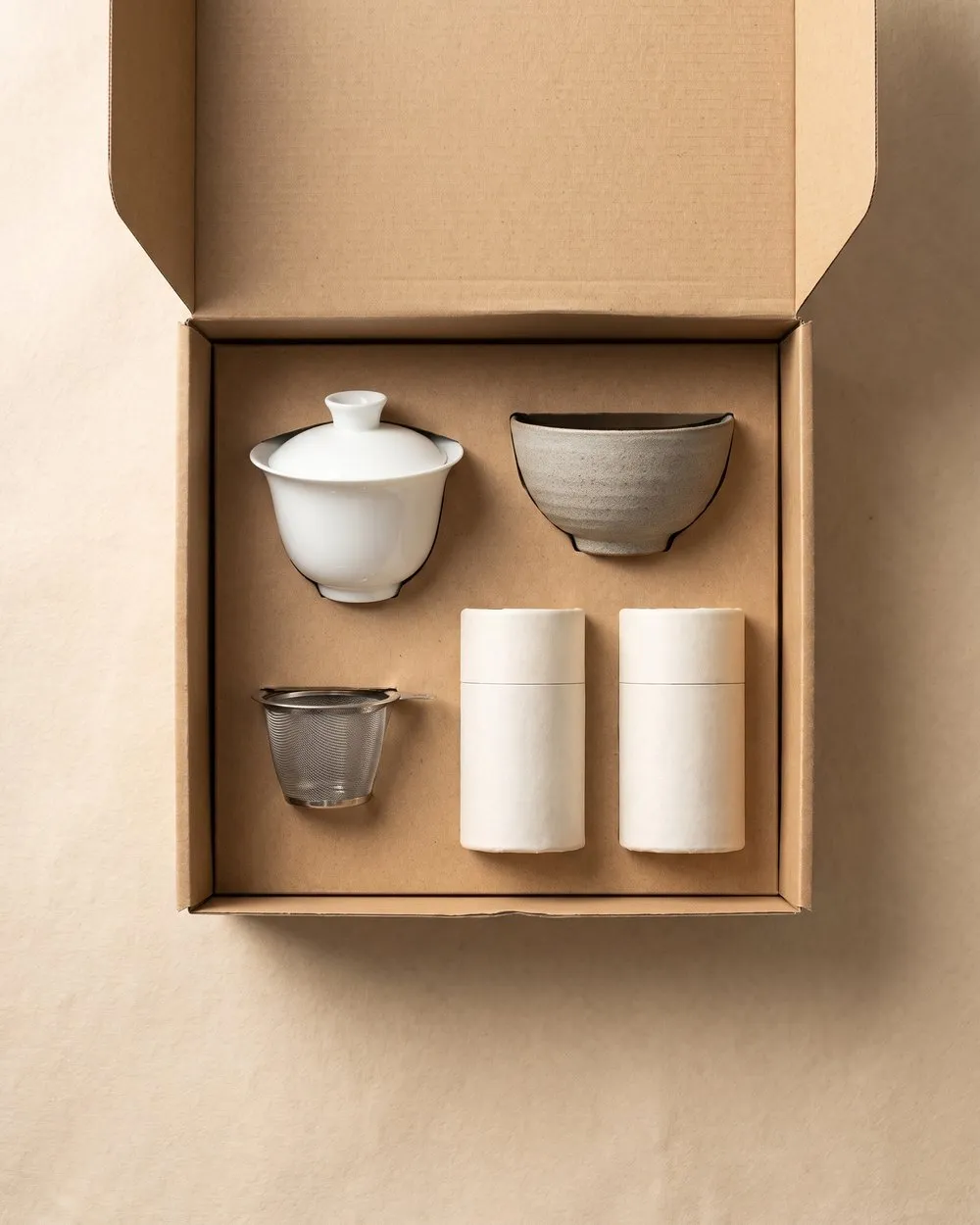
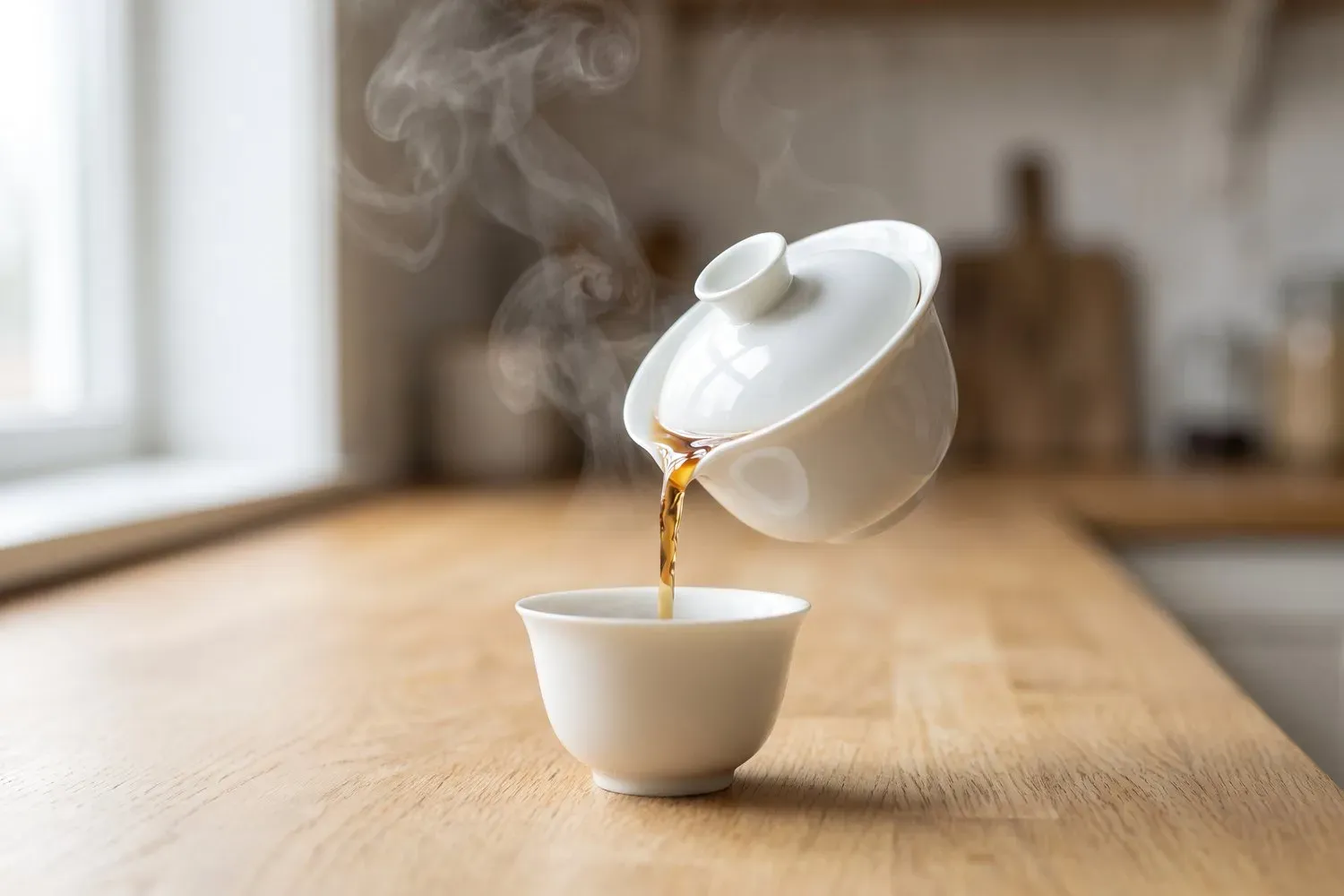
Oolong likes hot water and a generous hand with the leaf, and it usually gives several infusions. Brew at 90 to 95°C for two to three minutes in a pot, or in short repeated pours in a gaiwan.
- Use water at 90 to 95°C.
- Allow about 4 g of leaf per 250 ml.
- Brew two to three minutes in a pot.
- For gongfu, start at ten seconds and lengthen each pour.
- Expect four to six infusions from most oolongs.
Where to start
If you are new to oolong, start with a lightly oxidised one such as Ali Shan or our Jin Xuan, then work towards the roasted end. A tasting of two or three side by side teaches you more in an afternoon than any description can.
If you are not sure which end of the range you like, buy a 50 g caddy of two oolongs and brew them on the same afternoon. Compare them warm, then let the cups cool and taste again. Oolong changes as it cools, and the cooler cup often tells you more than the hot one.